ERP Strategy

The need to upgrade, change, modernise or rationalise may be obvious. The approach to take may not be.

Few boards will sanction a major ERP investment without a clear strategy behind it - the stakes and the risk are simply too high. We assess your systems landscape, model the costs and benefits, and hand you a recommended ERP roadmap your management team stands behind.

Book a Call

What we do

A clear, independent view of where ERP can take your business

Using our ERP Strategy development process, we clarify your business systems scope and assess your system landscape and business process capabilities in the context of your business strategy, then identify the improvements that system and process change can support.

The work culminates in a detailed analysis, a set of cost-⁠benefit models built with senior management, and a recommended ERP strategy roadmap - from selection through implementation and adoption. Lumenia is Europe’s leading independent ERP consulting company, and we have advised hundreds of organisations across most industry sectors on all of the leading ERP solutions.

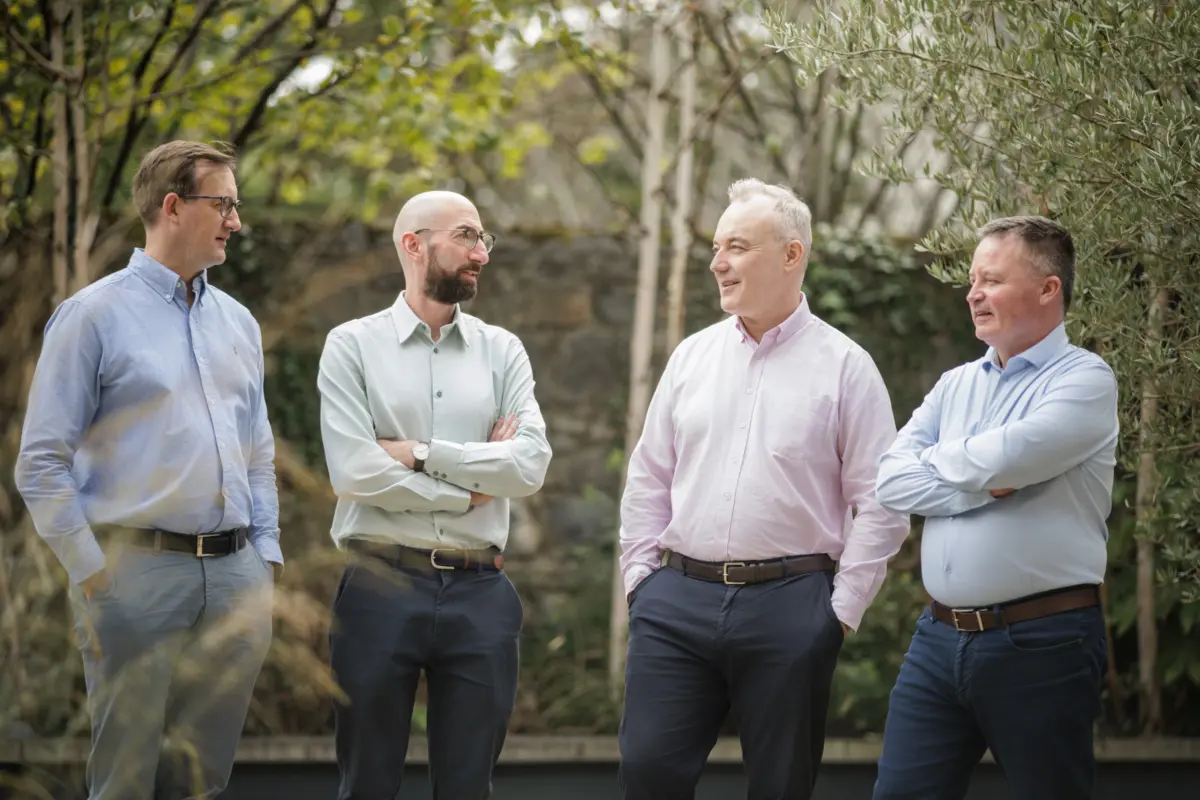
Lumenia's leadership team: Mark McKeigue, Edward Abrahamson, Ian O'Toole and John Donagher

The challenge

A decision to change ERP is not taken lightly

ERP projects are expensive, resource-⁠intensive and have a reputation for being risky. Most decision-⁠makers will not approve one until four things are firmly in place.

01

A clearly articulated strategy that shows where ERP will take the business.

02

A robust business case that stands up to board-⁠level scrutiny.

03

A realistic view of cost, benefit and risk before any commitment is made.

04

A management team that is fully behind the project.

An ERP strategy isn't a system decision - it's the cost-⁠benefit case, the roadmap and the management buy-⁠in that let a board approve the investment with confidence.

Our approach

From landscape assessment to a recommended roadmap

01

Assess your landscape

We quickly assess your system landscape and business process capabilities in the context of your business strategy.

02

Identify improvement opportunities

We pinpoint the improvements that system and process change can support, drawing on our library of over 450 examples of ERP-⁠enabled process improvement.

03

Build the cost-benefit models

A detailed analysis and set of cost-⁠benefit models is prepared, with senior management involvement and buy-⁠in at every step.

04

Recommend the roadmap

The work culminates in a recommended ERP strategy roadmap, sequenced from selection and process re-⁠design through organisational readiness, implementation and adoption.

What you get

The evidence behind the recommendation

Applications architecture maps

Jargon-⁠free, easy-⁠to-⁠follow graphical representations of your current and proposed future applications architecture, with intermediate stages as appropriate.

Quantified benefits statement

A detailed statement of the quantified business benefits of the proposed change, every benefit signed off by the relevant business owner.

Financial appraisal model

IRR, NPV and Payback calculations for the proposed applications strategy, ready for board-⁠level scrutiny.

Senior stakeholder presentation

The options considered - costs, benefits, pros and cons - with the recommendation and rationale, built on figures you can confidently stand over.

Proof

Deep ERP knowledge, engaged at every level

Common questions

Questions we hear about ERP strategy

Do we need a new ERP system, or could bolt-on solutions to our existing one do the job?
That is exactly what the strategy work answers. We assess your current landscape against your business strategy and compare the realistic options - extending the existing system with bolt-⁠ons, upgrading it, or migrating to a new ERP, a choice that becomes pressing as a system approaches end of life. You get an independent recommendation with the costs, benefits and pros and cons of each option, and the rationale behind it.
We run more than one ERP system following an acquisition - should we move to one?
Not automatically. We weigh continuing with multiple systems against consolidating onto one, and whether a single ERP across the whole business or ERP in tandem with Best-⁠of-⁠Breed solutions is the better fit - the right answer can differ between parts of the business. The recommendation is grounded in quantified costs and benefits for each option.
How much should we invest in systems over the next three to five years?
The strategy roadmap provides the basis for a comprehensive budget covering internal resource requirements as well as external software and services - a key input to the business case. We lead any soft market engagement needed to gather commercial costs and benchmark them against our extensive ERP project library. The result includes a financial appraisal model showing IRR, NPV and Payback for the proposed strategy - figures you can confidently stand over at board level.
What will our systems landscape look like in three years' time, and what are the steps along the way?
The roadmap answers precisely this. It sequences the transformation activities - selection of one or more solutions and partners, process re-⁠design, building organisational readiness, and one or more implementation phases - with cost and duration estimates for each stage feeding the overall business case. Current and proposed future architecture is presented in jargon-⁠free graphical form, with intermediate stages as appropriate.
Should we host our business applications on-premises or in the cloud?
Hosting is a standard part of the strategy assessment, alongside the relative strengths and weaknesses of the systems on the market. Because Lumenia is fully independent - no software to license and no implementation to win - the advice reflects what suits your organisation, not a vendor’s preference.
How does an ERP strategy reduce risk and cost of ownership?
Starting a business systems change initiative without a clear strategy greatly increases the risk of an ineffective selection process and a poor implementation. The strategy identifies how to reduce both the risk and the cost of ownership of your business applications, and every quantified benefit is signed off by the relevant business owner - so the case rests on numbers the organisation stands behind. And because Lumenia brings the templates, tools and expertise, the strategy is defined quickly and efficiently.

Next step

Ready to get started?

Talk to an independent ERP adviser about where you are today and what a strategy engagement would look like for your organisation.

Book a Call
Lumenia Consulting
Book a Call

Cookie settings

Choose which cookies we may use. Essential cookies keep the site working and cannot be switched off. You can change your choice at any time from the Cookie settings link at the bottom of every page. Read more in our Cookie Policy.

Strictly necessary

Keep the site secure and working, remember your cookie choice and remember that you have unlocked our publications.

Always active

Functional

Remember preferences such as which homepage photo you saw last, and load the interactive office map and embedded videos without asking each time.

Analytics

Help us understand how visitors use the site so we can improve it (Google Analytics, Microsoft Clarity).

Marketing

Measure our advertising, remember which campaign brought you to the site and show relevant adverts on other websites (Google Ads, LinkedIn).