ERP Change Management

Bring your people with you - and realise the full value of your ERP investment

ERP projects often impact processes, roles, organisational structures and ways of working. Change management helps people understand those changes, adapt successfully and make the transition with confidence.

Book a Call

What it involves

Moving the organisation from the current state to a desired future state

Effective change management helps organisations prepare for the people side of ERP transformation. It provides a structured approach to overcoming resistance, building ownership and helping individuals, teams and business functions transition successfully to new processes, systems and ways of working.

Change management is most effective when it starts early, grounded in a clear understanding of the scale and impact of change across the organisation. Early engagement helps stakeholders understand what is changing, why it is changing and how they will be affected.

Because Lumenia supports clients from strategy and selection through to implementation, we understand how ERP decisions translate into real organisational change and bring that context throughout the project lifecycle.

Lumenia provides ERP change leadership consulting services, applying proven change management methodology alongside practical leadership, advice and quality assurance. We work alongside internal client teams to plan, guide and coordinate change activities, helping to ensure successful adoption and long-⁠term capability.

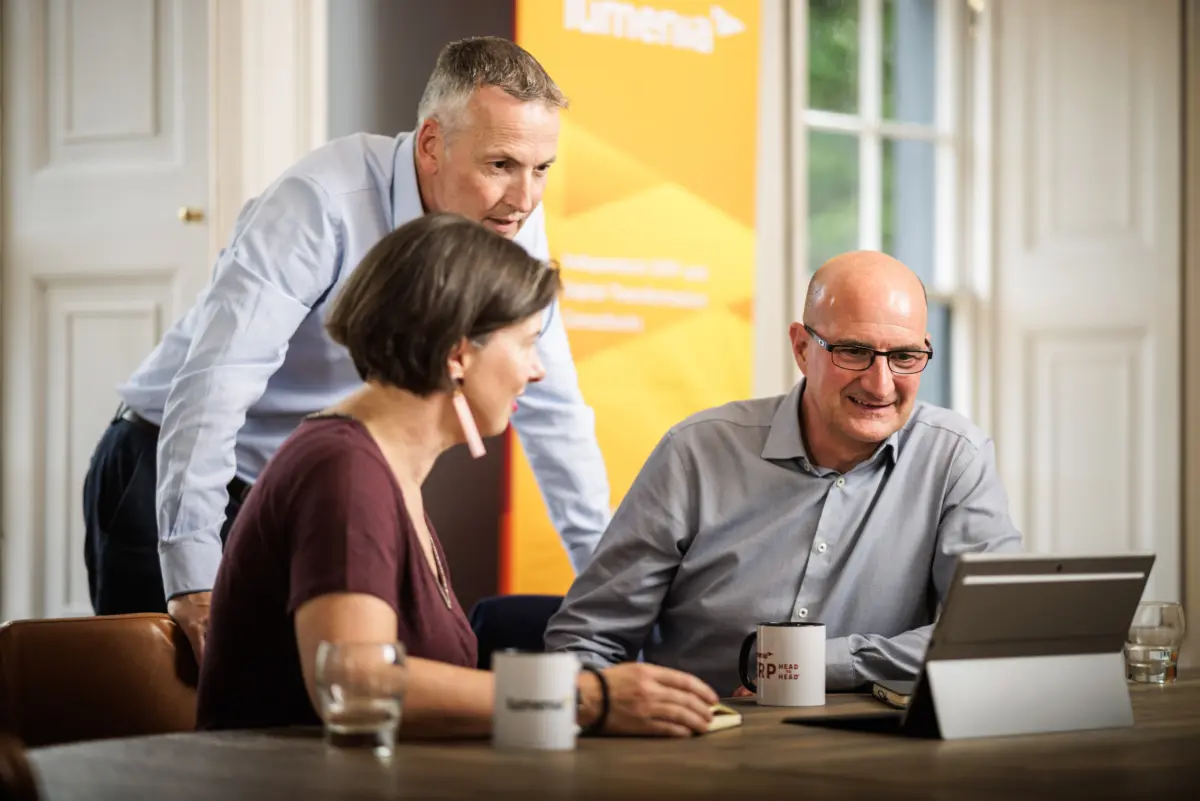
Three Lumenia consultants reviewing work together on a tablet

The challenge

A successful ERP implementation requires more than a good system

Change management in ERP projects is often underestimated, treated as a communications exercise, or left to the final weeks before go-⁠live. The results are familiar.

01

Significant changes to processes, roles and ways of working are not fully understood until late in the project.

02

Stakeholder engagement and communications start too late, allowing uncertainty and resistance to develop.

03

Users are expected to adopt new processes and systems without sufficient preparation, support or training.

04

The organisation goes live before it is ready, limiting adoption and delaying the benefits that the ERP project was intended to deliver.

Our approach

A structured methodology for ERP change management

Our change management methodology is designed specifically for ERP implementations. It begins with a clear change strategy and plan, aligned to the wider ERP project, and is delivered through four integrated streams: stakeholder engagement, project communications, change impact management and training. Together these activities support the successful adoption of new processes and systems.

01

Change strategy & planning

A clear strategy, governance structure and roadmap are established for managing change throughout the project. Change activities are aligned with the wider ERP plan, with clear deliverables, responsibilities and milestones.

02

Stakeholder engagement

Stakeholders are identified and engaged early, concerns are understood and support is built across the organisation. Structured stakeholder management helps address issues, maintain engagement and create ownership of future ways of working.

03

Project communications

Targeted communications are delivered throughout the project so people understand what is changing, why it is changing, when it is happening and what it means for them.

04

Change impact management

The impact of the ERP programme on processes, roles, responsibilities and organisational structures is assessed. Impact assessments identify who is affected, how they are affected, where support is needed most and what actions are required to help the workforce transition successfully.

05

Training

Users are prepared to perform their roles in the new environment through structured training, role-⁠based learning materials and coordinated training delivery aligned with project milestones.

Track record

Proven ERP change management across a wide range of organisations and industries

The result

An organisation as ready as the system

Internal change capability that remains in the organisation after the project ends.
Strong stakeholder buy-⁠in and ownership across the organisation.
Evidence that the organisation is genuinely ready for go-⁠live, not just the system.
Faster adoption - confident users, reduced disruption and earlier realisation of ERP benefits.

What you get

What a Lumenia change engagement puts in your hands

Whether acting as your dedicated change management resource or supporting an internal change lead, we ensure the key deliverables and controls needed for successful ERP change management are in place throughout the project lifecycle.

Change impact assessment

A documented assessment of the processes, roles and organisational structures affected by the ERP project, with actions identified to manage the impacts.

Change management plan

A change management plan aligned to the wider ERP project plan, including workstreams, responsibilities, milestones and key change activities.

Stakeholder engagement plan & communications calendar

Stakeholders identified and engaged, supported by a communications calendar aligned with the project plan to ensure timely and consistent communication.

Workforce transition plans

Plans for transitioning people into changed roles and responsibilities in step with go-⁠live, not after it.

Training strategy & coordination

A training strategy, training needs analysis and training schedule, with training activities coordinated across the project.

Readiness assessments by team & site

Change-⁠readiness assessments and surveys by team and location, providing the evidence needed to assess organisational readiness and support go-⁠live decisions.

Delivery models

Two ways to deliver change management

Lumenia's change management team combines extensive ERP transformation experience with recognised change management qualifications, including Prosci certification. The right delivery model depends on the scale and complexity of your project, the amount of organisational change involved, and the availability of internal resources.

Fractional

Lumenia alongside your own change lead

We provide change management expertise, methodology and guidance while working alongside a nominated internal resource. Your internal change lead brings a strong understanding of the business, stakeholders and organisational culture, while Lumenia provides the structure, tools and oversight needed to support successful delivery. No formal change management qualifications are required on your side. This approach builds internal capability while ensuring access to experienced ERP change management expertise.

Dedicated

A Lumenia change manager, embedded

A dedicated ERP change manager joins your project team and takes responsibility for planning, coordinating and delivering the change management workstream. Bringing proven methodologies, tools and experience, they work alongside project stakeholders to help ensure successful adoption of the new ERP system.

Common questions

Questions we hear about ERP change management

How is change management different on an ERP project?
ERP change is unusually broad, often affecting processes, roles and responsibilities, structures and ways of working across the organisation. That’s why our methodology is designed specifically for ERP implementations, combining stakeholder engagement, communications, change impact management and training within a structured framework aligned to the ERP project plan.
What are the most common ERP change management challenges?
The challenges we see repeatedly include inadequate stakeholder engagement and alignment, unclear communication, limited understanding of how new processes will affect people’s day-⁠to-⁠day jobs, and difficulty coordinating and delivering training. Left unmanaged, these lead to poor adoption of the new system and supporting processes, and delays - or outright failure - in achieving the intended outcomes and benefits of the ERP project.
When should change management start in an ERP project?
Change management should begin early, ideally during the planning or design phases of an ERP project. Starting early allows organisations to proactively identify key stakeholders, begin communications and understand potential change impacts before they become issues. This leads to smoother implementation and better adoption when the new system is deployed.
What is the difference between an ERP project manager and an ERP change manager?

The project manager focuses on delivering the overall implementation, including scope, schedule, resources, budget and coordination with the ERP vendor and internal project team. The change manager focuses on helping people and teams prepare for, adopt and sustain the new ways of working. Both roles are closely linked and work together throughout the project. Effective coordination between ERP project delivery and change management is critical to ensuring the new system is both implemented and successfully adopted across the organisation.

Lumenia can provide support for both project management and change management, ensuring that delivery and adoption are aligned throughout the ERP project lifecycle.

Do we need a dedicated change manager?
Not necessarily. The most appropriate approach depends on the scale and complexity of the project, the amount of organisational change involved and the availability of suitable internal resources. Some organisations benefit from a dedicated ERP change manager, while others successfully deliver change using an internal change lead supported by Lumenia. In these situations, the internal change lead typically brings a strong understanding of the business, stakeholders and organisational culture, while Lumenia provides the methodology, tools, mentoring and oversight needed to support successful delivery. This approach provides structure and expertise while building internal capability, and can be a more budget-⁠friendly alternative to appointing a dedicated change manager.
How do you measure whether the organisation is ready for go-live?
Readiness is assessed rather than assumed. Readiness assessments, stakeholder feedback and change-⁠readiness surveys provide evidence of how prepared different teams and sites are for the new ways of working, supporting informed go-⁠live decisions.

Next step

Ready to make it stick?

Talk to an independent ERP change management specialist about how much change your ERP project involves, and what it will take to bring your people with you.

Book a Call
Lumenia Consulting
Book a Call

Cookie settings

Choose which cookies we may use. Essential cookies keep the site working and cannot be switched off. You can change your choice at any time from the Cookie settings link at the bottom of every page. Read more in our Cookie Policy.

Strictly necessary

Keep the site secure and working, remember your cookie choice and remember that you have unlocked our publications.

Always active

Functional

Remember preferences such as which homepage photo you saw last, and load the interactive office map and embedded videos without asking each time.

Analytics

Help us understand how visitors use the site so we can improve it (Google Analytics, Microsoft Clarity).

Marketing

Measure our advertising, remember which campaign brought you to the site and show relevant adverts on other websites (Google Ads, LinkedIn).